
Amalgama
[4 Guitars] [score & parts]
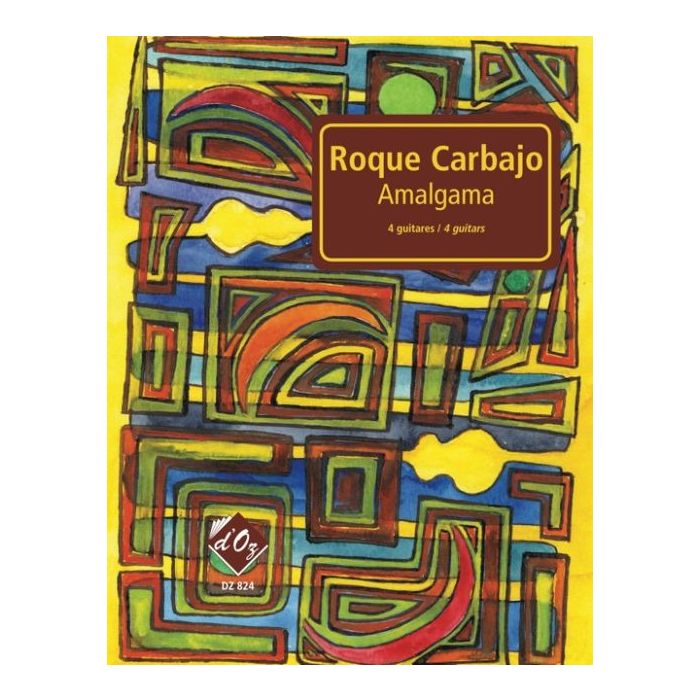
Dedicated to Cristobal Soto, this little piece has a massive repeat that almost doubles the length of the finished item. Set in a mix of 3/4 and 6/8 time, it proceeds at a fair old pace, beginning with two, then three, then aIl four guitars. The alternation between the two meters is not strict but almost every bar has a stridently syncopated and joyous feel to it..
With two guitars a third apart, and syncopated fanfare-like chords, this brings to mind a Mexican Mariachi band. Starting in E minor, the writing harmonises Gs and F#s using chords of E and B, before a sudden key change takes the same notes into G minor with chords of G minor and D. Before one can take in what has happened, the music is back where it was. There are more key changes yet, before the centre section, which presents a more graceful and restful orchestration, but still maintains the strongly syncopated style of the opening.
Requiring only a modest technical ability, this is a fun piece. But for inexperienced musicians, the rhythm will be a massive challenge, and keeping it together when the interlocking rhythms don't interlock might prove tough. Highly recommended for those with a better sense of rhythm than most guitarists seem to be burdened with!
Derek Hasted (Classical Guitar Magazine)
| Featured Product | No |
|---|---|
| Composer | CARBAJO, ROQUE |
| Availability | Available |
| TAB/Notation | Music Notation Only |
| Level of Difficulty | 3 |
| Description | Dedicated to Cristobal Soto, this little piece has a massive repeat that almost doubles the length of the finished item. Set in a mix of 3/4 and 6/8 time, it proceeds at a fair old pace, beginning with two, then three, then aIl four guitars. The alternation between the two meters is not strict but almost every bar has a stridently syncopated and joyous feel to it.. With two guitars a third apart, and syncopated fanfare-like chords, this brings to mind a Mexican Mariachi band. Starting in E minor, the writing harmonises Gs and F#s using chords of E and B, before a sudden key change takes the same notes into G minor with chords of G minor and D. Before one can take in what has happened, the music is back where it was. There are more key changes yet, before the centre section, which presents a more graceful and restful orchestration, but still maintains the strongly syncopated style of the opening. Requiring only a modest technical ability, this is a fun piece. But for inexperienced musicians, the rhythm will be a massive challenge, and keeping it together when the interlocking rhythms don't interlock might prove tough. Highly recommended for those with a better sense of rhythm than most guitarists seem to be burdened with! Derek Hasted (Classical Guitar Magazine) |