
Essential Flamenco Guitar, Volume 2
[Method Book & Solos] [Book & Online Audio]
An In-Depth Course for Absolute Beginners to More Advanced Players
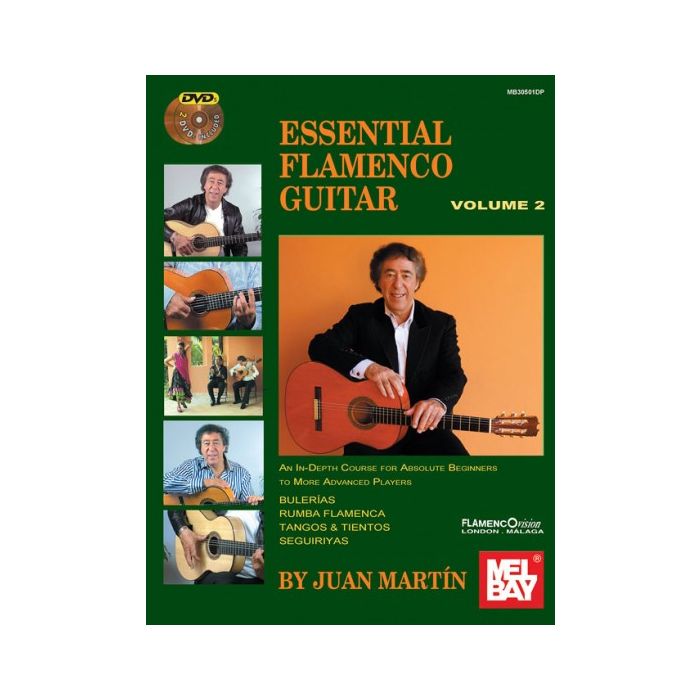
The acclaimed first volume of this exciting series gave extensive insights into basic techniques of flamenco guitar playing and the two important rhythmic forms (palos) of Solea and Alegrias. This second volume continues with an exploration of further essential rhythmic palos. The first of these is the Bulerias. Juan Martin brings his many years of experience as an internationally renowned flamenco soloist and accompanist for singers and dancers to unraveling its mysteries, explaining and demonstrating very clearly the different elements of its rhythmic structure and the various ways it may be accented and counted. He uses traditional and more modern examples of the different kinds of rhythm and melodic passages (falsetas) to provide an invaluable understanding of this wonderful palo. The second rhythmic form is devoted to the popular flamenco Rumba, then Tangos, Tientos and that most profound of all the palos, the deeply moving Seguiriyas. Juan's solo playing is complemented by demonstrations of the guitar's role in accompanying the flamenco dance (baile) and song (cante) with the help of outstanding dancers Raquel de Luna and Miguel Infante and singers Amparo Heredia (La Repompilla) and Carlos Brias. The music for solo guitar is transcribed in standard notation and tablature (cifra) and the online video contain nearly three hours of explanation and demonstrations. The series is complemented by two other best-selling Juan Martin volumes published by Mel Bay. These provide progressively graded solo material to extend the repertoire, from beginner to concert level. Includes access to online video.
Introduction by Juan Martín
Key to Symbols and Notation
Tuning the Guitar
BULERÍAS
Introductory Bulerías Sequence
Bulerías – The Basic Compás
The Compás – Slightly Faster
Elements of the Compás
Golpes in the Compás of Bulerías
Estilo Campero – al golpe
Introducing the ‘Straight’ Beat
The al golpe Beat Again
Counting in 6’s (with the ‘Straight’ Beat)
More on the ‘Straight’ Beat
Counting the Compás
Counting the 5 Accents Example 1
Counting the 5 Accents Example 2
Marking Beats 7, 8 and 10
Feeling the 6’s
A First Falseta
Thumb Technique in First Falseta
First Falseta – FASTER
Two More Falsetas
A Simpler Falseta
The Key Role of Ritmeo
Transition to G minor
Further Chord Changes in Ritmeo
Raquel Dances a Basic Bulerías
Two Classic Falsetas por arriba
Another Falseta por arriba
A Sad Falseta
Thumb Falseta No 1
Sequence in the Minor Key and por medio
A Sequence with Aranques
Analysis – The Timing of Aranques
Another Aranque
Ritmeo and Falsetas
Picado Falseta No 1
Picado Falseta No 2
Another Thumb Falseta
Some Modern Variations
Slapping Technique in Bulerías
Falseta in A Major Position
Raquel Demonstrates the Female Dance
The Llamada
The Accentuation in 6’s
Miguel Dances a Male Version
Raquel and Miguel
Amparo Sings Bulerías in Ronda
RUMBA
Rumba Sequence
Tu eres la fuente
Basic Compás
Right Hand in Rumba
Left Hand Apagado
Phrygian Chordal Sequence
Slapping Rhythm
Moving the Slaps
Rumba Song
Another Rhythm Technique
– in Slow Motion
Arpegio Rhythm
Summary of Four Rhythm Techniques
Rumba Solo
Maria Ángeles
El agua se va pa’ el rio
The Rumba’s Flexible Rhythm
Raquel Teaches a Simple Rumba
TIENTOS
Basic Compás
Comparison with Tangos
Alternative Tientos Ending with Transitional Chords
Falseta Imitating the Cante
A Traditional Falseta
Tientos por arriba
TANGOS
Introduction
Tangos with Retuned 6th string
Raquel Dances Tangos
SEGUIRIYAS
Basic Compás
Counting the Compás
Counting the Compás (continued)
Falseta de Javier Molina
Falseta in the Bass
A Classic Falseta
Doubling the Rhythm
Modern Chords for Seguiriyas
More Falsetas
Miguel Dances Seguiriyas
Raquel Dances Seguiriyas, Carlos Sings
Amparo Sings Seguiriyas
Intro to Next DVD & Fandangos
| Featured Product | No |
|---|---|
| Composer | MARTIN, JUAN |
| Availability | Available |
| TAB/Notation | Music Notation PLUS TAB |
| Level of Difficulty | 4 |
| Additional Media | Online Video |
| Description | The acclaimed first volume of this exciting series gave extensive insights into basic techniques of flamenco guitar playing and the two important rhythmic forms (palos) of Solea and Alegrias. This second volume continues with an exploration of further essential rhythmic palos. The first of these is the Bulerias. Juan Martin brings his many years of experience as an internationally renowned flamenco soloist and accompanist for singers and dancers to unraveling its mysteries, explaining and demonstrating very clearly the different elements of its rhythmic structure and the various ways it may be accented and counted. He uses traditional and more modern examples of the different kinds of rhythm and melodic passages (falsetas) to provide an invaluable understanding of this wonderful palo. The second rhythmic form is devoted to the popular flamenco Rumba, then Tangos, Tientos and that most profound of all the palos, the deeply moving Seguiriyas. Juan's solo playing is complemented by demonstrations of the guitar's role in accompanying the flamenco dance (baile) and song (cante) with the help of outstanding dancers Raquel de Luna and Miguel Infante and singers Amparo Heredia (La Repompilla) and Carlos Brias. The music for solo guitar is transcribed in standard notation and tablature (cifra) and the online video contain nearly three hours of explanation and demonstrations. The series is complemented by two other best-selling Juan Martin volumes published by Mel Bay. These provide progressively graded solo material to extend the repertoire, from beginner to concert level. Includes access to online video. Introduction by Juan Martín Key to Symbols and Notation Tuning the Guitar BULERÍAS Introductory Bulerías Sequence Bulerías – The Basic Compás The Compás – Slightly Faster Elements of the Compás Golpes in the Compás of Bulerías Estilo Campero – al golpe Introducing the ‘Straight’ Beat The al golpe Beat Again Counting in 6’s (with the ‘Straight’ Beat) More on the ‘Straight’ Beat Counting the Compás Counting the 5 Accents Example 1 Counting the 5 Accents Example 2 Marking Beats 7, 8 and 10 Feeling the 6’s A First Falseta Thumb Technique in First Falseta First Falseta – FASTER Two More Falsetas A Simpler Falseta The Key Role of Ritmeo Transition to G minor Further Chord Changes in Ritmeo Raquel Dances a Basic Bulerías Two Classic Falsetas por arriba Another Falseta por arriba A Sad Falseta Thumb Falseta No 1 Sequence in the Minor Key and por medio A Sequence with Aranques Analysis – The Timing of Aranques Another Aranque Ritmeo and Falsetas Picado Falseta No 1 Picado Falseta No 2 Another Thumb Falseta Some Modern Variations Slapping Technique in Bulerías Falseta in A Major Position Raquel Demonstrates the Female Dance The Llamada The Accentuation in 6’s Miguel Dances a Male Version Raquel and Miguel Amparo Sings Bulerías in Ronda RUMBA Rumba Sequence Tu eres la fuente Basic Compás Right Hand in Rumba Left Hand Apagado Phrygian Chordal Sequence Slapping Rhythm Moving the Slaps Rumba Song Another Rhythm Technique – in Slow Motion Arpegio Rhythm Summary of Four Rhythm Techniques Rumba Solo Maria Ángeles El agua se va pa’ el rio The Rumba’s Flexible Rhythm Raquel Teaches a Simple Rumba TIENTOS Basic Compás Comparison with Tangos Alternative Tientos Ending with Transitional Chords Falseta Imitating the Cante A Traditional Falseta Tientos por arriba TANGOS Introduction Tangos with Retuned 6th string Raquel Dances Tangos SEGUIRIYAS Basic Compás Counting the Compás Counting the Compás (continued) Falseta de Javier Molina Falseta in the Bass A Classic Falseta Doubling the Rhythm Modern Chords for Seguiriyas More Falsetas Miguel Dances Seguiriyas Raquel Dances Seguiriyas, Carlos Sings Amparo Sings Seguiriyas Intro to Next DVD & Fandangos |