
Introducing The Guitar
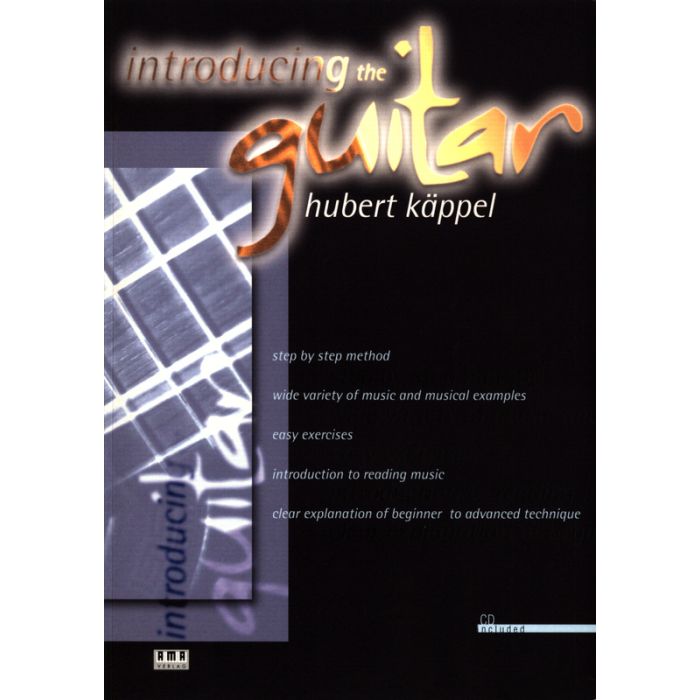
The worldwide honoured and successful classical concert guitarist Hubert Käppel is among the greatest artists of his kind. His reputation as an instrumentalist and guitar teacher is without controversy. He was the only ever German awardee of the "Concorso Internazionale di interpretazione" and has been touring the world ever since. He is leading the most successful European guitar class at the conservatoire in Cologne, he is the initiator of the "International Guitar Seminar Frechen / Cologne" and an often demanded jury member at international guitar competitions.
In “Introducing the Guitar” he uses his musical skills and his experience as an educator. The result is a fundamental teaching book which gives access to the classical guitar through vivid examples and numerous pieces and etudes on 250 pages. Yet these pieces are not purely classical nature, but also originate from Country & Western songs. Many different playing techniques are thought in the 20 chapters of this guitar school (e.g. 1st block chords, free strokes, barre chords, and two-part chords) in regard of their practical and theoretical nature, which are explained meticulously and yet the author succeeds in increasing the didactical difficulty.
In numerous photos, illustrations and sound samples on the CD the playing techniques are also demonstrated. The teaching book ends with two chapters, which include four demanding solo pieces from different epochs (Renaissance, Baroque, Classical / Romantic, Modern) respectively three ensemble pieces (also playable with a melody instrument instead of guitars), which can be presented by the students in an audition. Due to the extensive explanations and accurate playing aids, this book is also suitable for self-study and provides a guitar teacher plenty of teaching material.
Preface
Working And Practicing With The CD
Working And Practicing With The Book
CD-Index List
Chapter 1: Introduction
The Guitar
Suggestions For Buying A Guitar / Basic Equipment
A Short History Of The Guitar
Which Guitar For Which Body Height?
The Strings Of The Guitar
Tuning The Guitar
Holding The Guitar
The Right Hand (RH)
The First Sounds On The Guitar
Chapter 2: Tirando Strake With The Thumb/ Musical Basics
Accompaniment On Open Strings
Introduction To Musical Notation
From The Written Note On The Staff To The Guitar
Playing Open Strings With The Thumb
The Left Hand (LH)
Left Hand Position
Bodybuilding For The Left Hand
The Notes On The g-String
Accents Within A Measure
The Notes On The b-String
Simple Fingering Rule
The Upbeat
Tips For Daily Practicing
The Notes On The d-String
Keeping The Fingers Down On The Fingerboard
Scale Exercise 1 And 2
Syncopation
Simple Song Accompaniment
Rhythm, Tempo And Technique
The Notes On The a-String
The Pentatonic Scale
Chapter 3: First Song Accompaniment Using 6 Strings / RH Playing Technique
The First Two Chords, E Minor And A Dominant 7th
Strumming Technique
The Tie
Rhythm With Syncopation
Two More Chords, A Minor And E Dominant 7th 7
Chapter 4: Basic Music Theorie
Whole Tones And Semitones
The Constructing Of Major Tonality
The C Major Scale
Rests
Stopping The Strings
Major And Minor Keys
The Notes On The e-String
The Sixteenth Note
Dotted Quarter Notes And Dotted Eight Notes
The Left Hand Pinky
Chapter 5: The Tirando Stroke
Two Opposite Directions Of Movement
The "Right Feeling" In The Fingers
The Tirando Strake With The Index And Middle Fingers
Tone Development Exercises
Alternating i/m Tirando Strake
Alternating Strake Exercises On Two Strings
Alternating Strake Exercises On One String
The Notes On The e’-String
The Note b On The g-String Using The Fourth Finger
Expanded Fingering Rule
Chapter 6: Playing Your First Chord
Simultaneous Playing With The Index, The Middle And Ring Finger (i-m-a)
Alternating The Thumb And The i-m-a Strake
Two Main Chords in C Major (C Major And G7)
Three Chord Changing Exercises
Chapter 7: Dynamics And Tonal Color
Playing Loud And Soft
Notes Below The Staff
Tonal Color
Chapter 8: More Basic Music Theory
From C Major Ta G Major
The Note F# On The e-, d- And e’’-Strings
Alternating The Tirande And The m/a Stroke
Alternatinq m/a Stroke On Two Strings
Chapter 9: The Two Note Alternating Stroke / New Keys
Tirando With The Thumb And Index Finger p-i
Minor Tonality And The Keys Of A Minor
From A Minor To E Minor
From E Minor To B Minor
D Minor, The Relative Minor Of F Major
The Lowering Accidental: The Flat (b)
The Positions On The Guitar
All The # Notes In I. Position
Two Names For The Same Note
Tirando With The Thumb / Middle Finger p-m And The Thumb / Ring Finger p-a
From G Major To D Major
From D Major To A Major
From A Major To E Major
Overview Of Keys Learned Up To This Point
From C Major To F Major
A New Value: The Triplet
The Half Position
The Change To Half Position
Chapter 10: Playing Chords With Three And Four Simultaneous Notes
Two Chord Playing Studies
Arpeggiated Chords
Chapter 11: Furthering LH Technique I
Stretching And Contracting The LH Fingers
Fingering With Two Or More Fingers Simultaneously
Strength And Flexibility Exercises For The Fourth Finger / Finger Acrobatics
Playing In Sixths
Chapter 12: Arpeggios
Three Note Arpeggios With p-i-m
Left Hand Study / Arpeggio Exercises By M. Giuliani(op.1a)
Three Note Arpeggios With p-m-a And p-i-a
Four Note Arpeggios With p-i-m-a
The Six Basic Arpeggios
Practicing Arpeggios
More Elementary Arpeggio Patterns
Arpeggios Containing Chords
The Relationship Between Arpeggios And Chords
Chordal Study
Chapter 13: Short Introduction To Bar Technique
The Half Bar
The F Major Chord
The A Major Chord With The Half Bar
Chapter 14: Short Harmony Lesson / Chord Construction
The Interval
The Three Main Major Chords And Their Guitar Tabulature Diagrams In The Most Important Guitar Keys
Major And Minor Triads
The Harmonic Minor Seale
The Three Main Minor Chords And Their Guitar Tabulature Diagrams In The Most Important Guitar Keys
The Dominant Seventh Chord
Important Dominant Seventh Chords In Different Positions
The Neighboring Chords (Triads) In Major Keys
Chapter 15: Song Accompaniment Using Various RH Patterns
Songs In 3/4 And 6/8 Time
Songs In 2/4 And 4/4 Time
Chapter 16: Furthering LH Technique II / Playing In II. Position
Two Fundamental Finger Combinations: 1-2-4 And 1-3-4
Changing Positions
Tempo Indications
Chapter 17: Arpeggio Etudes And Solo Pieces
Chapter 18: Playing Two Notes Simultaneously
Dampening The Bass Strings
Songs And Dances With Open String Accompaniment
Songs And Solo Pieces With Fingered Bass Note Accompaniment
Playing Two Notes Simultaneously In Arpeggios
Chapter 19: Chamber Music
Chapter 20: Four Advanced Solo Pieces From Different Musical Periods
Appendix
Song Accompaniment With Strumming
Christmas Songs For Beginners
Christmas Songs For Advanced Students
Tuning With A Tuning Fork
Changing Strings
Playing With Your Fingernails - A Short Introduction
Alphabetical Listing Of Musical Pieces And Songs
| Featured Product | No |
|---|---|
| Composer | KAPPEL, HUBERT |
| Availability | Available |
| TAB/Notation | Music Notation Only |
| Additional Media | One Audio CD |
| Description | The worldwide honoured and successful classical concert guitarist Hubert Käppel is among the greatest artists of his kind. His reputation as an instrumentalist and guitar teacher is without controversy. He was the only ever German awardee of the "Concorso Internazionale di interpretazione" and has been touring the world ever since. He is leading the most successful European guitar class at the conservatoire in Cologne, he is the initiator of the "International Guitar Seminar Frechen / Cologne" and an often demanded jury member at international guitar competitions. In “Introducing the Guitar” he uses his musical skills and his experience as an educator. The result is a fundamental teaching book which gives access to the classical guitar through vivid examples and numerous pieces and etudes on 250 pages. Yet these pieces are not purely classical nature, but also originate from Country & Western songs. Many different playing techniques are thought in the 20 chapters of this guitar school (e.g. 1st block chords, free strokes, barre chords, and two-part chords) in regard of their practical and theoretical nature, which are explained meticulously and yet the author succeeds in increasing the didactical difficulty. In numerous photos, illustrations and sound samples on the CD the playing techniques are also demonstrated. The teaching book ends with two chapters, which include four demanding solo pieces from different epochs (Renaissance, Baroque, Classical / Romantic, Modern) respectively three ensemble pieces (also playable with a melody instrument instead of guitars), which can be presented by the students in an audition. Due to the extensive explanations and accurate playing aids, this book is also suitable for self-study and provides a guitar teacher plenty of teaching material. Preface Working And Practicing With The CD Working And Practicing With The Book CD-Index List
Chapter 1: Introduction The Guitar Suggestions For Buying A Guitar / Basic Equipment A Short History Of The Guitar Which Guitar For Which Body Height? The Strings Of The Guitar Tuning The Guitar Holding The Guitar The Right Hand (RH) The First Sounds On The Guitar
Chapter 2: Tirando Strake With The Thumb/ Musical Basics Accompaniment On Open Strings Introduction To Musical Notation From The Written Note On The Staff To The Guitar Playing Open Strings With The Thumb The Left Hand (LH) Left Hand Position Bodybuilding For The Left Hand The Notes On The g-String Accents Within A Measure The Notes On The b-String Simple Fingering Rule The Upbeat Tips For Daily Practicing The Notes On The d-String Keeping The Fingers Down On The Fingerboard Scale Exercise 1 And 2 Syncopation Simple Song Accompaniment Rhythm, Tempo And Technique The Notes On The a-String The Pentatonic Scale
Chapter 3: First Song Accompaniment Using 6 Strings / RH Playing Technique The First Two Chords, E Minor And A Dominant 7th Strumming Technique The Tie Rhythm With Syncopation Two More Chords, A Minor And E Dominant 7th 7
Chapter 4: Basic Music Theorie Whole Tones And Semitones The Constructing Of Major Tonality The C Major Scale Rests Stopping The Strings Major And Minor Keys The Notes On The e-String The Sixteenth Note Dotted Quarter Notes And Dotted Eight Notes The Left Hand Pinky
Chapter 5: The Tirando Stroke Two Opposite Directions Of Movement The "Right Feeling" In The Fingers The Tirando Strake With The Index And Middle Fingers Tone Development Exercises Alternating i/m Tirando Strake Alternating Strake Exercises On Two Strings Alternating Strake Exercises On One String The Notes On The e’-String The Note b On The g-String Using The Fourth Finger Expanded Fingering Rule
Chapter 6: Playing Your First Chord Simultaneous Playing With The Index, The Middle And Ring Finger (i-m-a) Alternating The Thumb And The i-m-a Strake Two Main Chords in C Major (C Major And G7) Three Chord Changing Exercises
Chapter 7: Dynamics And Tonal Color Playing Loud And Soft Notes Below The Staff Tonal Color
Chapter 8: More Basic Music Theory From C Major Ta G Major The Note F# On The e-, d- And e’’-Strings Alternating The Tirande And The m/a Stroke Alternatinq m/a Stroke On Two Strings
Chapter 9: The Two Note Alternating Stroke / New Keys Tirando With The Thumb And Index Finger p-i Minor Tonality And The Keys Of A Minor From A Minor To E Minor From E Minor To B Minor D Minor, The Relative Minor Of F Major The Lowering Accidental: The Flat (b) The Positions On The Guitar All The # Notes In I. Position Two Names For The Same Note Tirando With The Thumb / Middle Finger p-m And The Thumb / Ring Finger p-a From G Major To D Major From D Major To A Major From A Major To E Major Overview Of Keys Learned Up To This Point From C Major To F Major A New Value: The Triplet The Half Position The Change To Half Position
Chapter 10: Playing Chords With Three And Four Simultaneous Notes Two Chord Playing Studies Arpeggiated Chords
Chapter 11: Furthering LH Technique I Stretching And Contracting The LH Fingers Fingering With Two Or More Fingers Simultaneously Strength And Flexibility Exercises For The Fourth Finger / Finger Acrobatics Playing In Sixths
Chapter 12: Arpeggios Three Note Arpeggios With p-i-m Left Hand Study / Arpeggio Exercises By M. Giuliani(op.1a) Three Note Arpeggios With p-m-a And p-i-a Four Note Arpeggios With p-i-m-a The Six Basic Arpeggios Practicing Arpeggios More Elementary Arpeggio Patterns Arpeggios Containing Chords The Relationship Between Arpeggios And Chords Chordal Study
Chapter 13: Short Introduction To Bar Technique The Half Bar The F Major Chord The A Major Chord With The Half Bar
Chapter 14: Short Harmony Lesson / Chord Construction The Interval The Three Main Major Chords And Their Guitar Tabulature Diagrams In The Most Important Guitar Keys Major And Minor Triads The Harmonic Minor Seale The Three Main Minor Chords And Their Guitar Tabulature Diagrams In The Most Important Guitar Keys The Dominant Seventh Chord Important Dominant Seventh Chords In Different Positions The Neighboring Chords (Triads) In Major Keys
Chapter 15: Song Accompaniment Using Various RH Patterns Songs In 3/4 And 6/8 Time Songs In 2/4 And 4/4 Time
Chapter 16: Furthering LH Technique II / Playing In II. Position Two Fundamental Finger Combinations: 1-2-4 And 1-3-4 Changing Positions Tempo Indications
Chapter 17: Arpeggio Etudes And Solo Pieces
Chapter 18: Playing Two Notes Simultaneously Dampening The Bass Strings Songs And Dances With Open String Accompaniment Songs And Solo Pieces With Fingered Bass Note Accompaniment Playing Two Notes Simultaneously In Arpeggios
Chapter 19: Chamber Music
Chapter 20: Four Advanced Solo Pieces From Different Musical Periods
Appendix Song Accompaniment With Strumming Christmas Songs For Beginners Christmas Songs For Advanced Students Tuning With A Tuning Fork Changing Strings Playing With Your Fingernails - A Short Introduction Alphabetical Listing Of Musical Pieces And Songs |