
Petit Jazz a Paris
[Guitar & Flute]
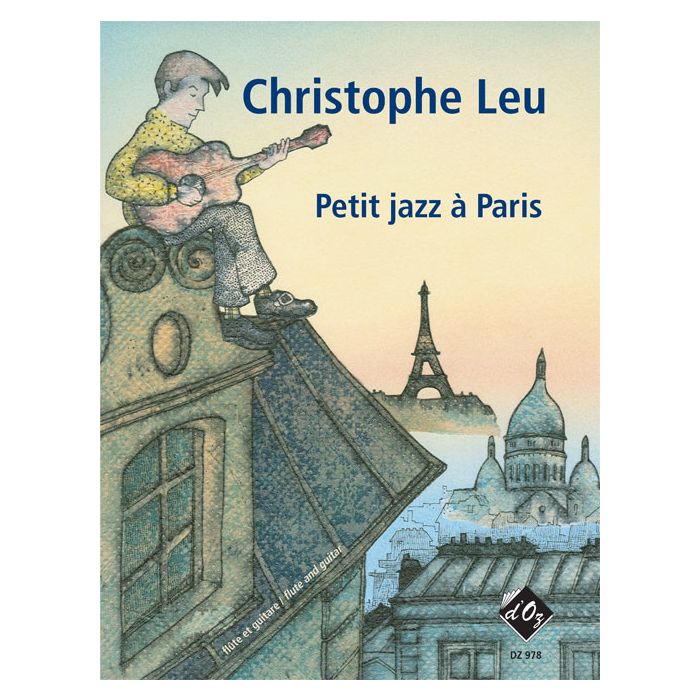
Petit Jazz a Paris is a small set of three titled pieces consisting of Saint Germain: an amiable start to the set with a nice melody line over some lovely jazzy chords and an occasional walking bass line, presumably meant to symbolise the double-bass in a jazz «combo«; Montmartre - a splendid, nostalgic and evocative slow, moody work; and Jardin du Luxembourg - a finale reminiscent of the style of the "Hot Club de France" with a really «cool« guitar part played under an improvisatory-sounding flute melody.
Written for the twins Annie and Nadia Labrie (Duo Similia) this would make a really nice concert item for any flute and guitar duos looking to play a bit of jazz in their repertoire. The technical standard is kept within the Grades 6-7 mark and the presentation is very good with a separate part for the flautist. The guitarist needs to play directly from the score, but there are convenient rests or long notes at page turns.
Steve Marsh (Classical Guitar Magazine)
| Featured Product | No |
|---|---|
| Composer | LEU, CRISTOPHE |
| Availability | Available |
| TAB/Notation | Music Notation Only |
| Level of Difficulty | 3 |
| Description | Petit Jazz a Paris is a small set of three titled pieces consisting of Saint Germain: an amiable start to the set with a nice melody line over some lovely jazzy chords and an occasional walking bass line, presumably meant to symbolise the double-bass in a jazz «combo«; Montmartre - a splendid, nostalgic and evocative slow, moody work; and Jardin du Luxembourg - a finale reminiscent of the style of the "Hot Club de France" with a really «cool« guitar part played under an improvisatory-sounding flute melody. Written for the twins Annie and Nadia Labrie (Duo Similia) this would make a really nice concert item for any flute and guitar duos looking to play a bit of jazz in their repertoire. The technical standard is kept within the Grades 6-7 mark and the presentation is very good with a separate part for the flautist. The guitarist needs to play directly from the score, but there are convenient rests or long notes at page turns. Steve Marsh (Classical Guitar Magazine) |