
Renaissance Vihuela and Guitar In 16th Century Spain
[Solo Guitar Anthology]
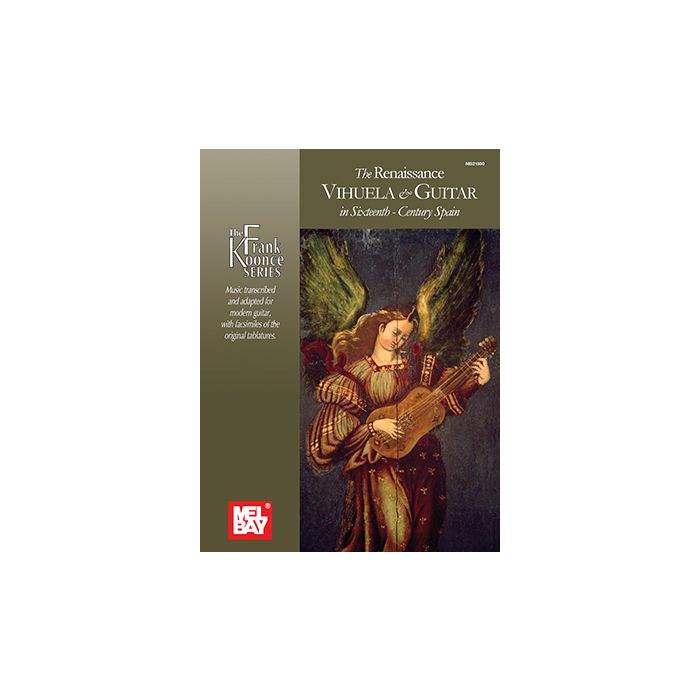
Scholarly editions, which serve different purposes than performance editions, are not often designed with the modern guitarist in mind. For instance, Renaissance vihuela tablatures are usually transcribed with the open first string as G, not E. Most are presented in double-staff notation, a medium that is superior for realizing counterpoint but unconventional as guitar notation. Furthermore, these editions sometimes give idealized, but not realistic, solutions for voicing, note duration, and other matters that need to be considered within the limitations of our instrument. Guitarists who try to play from these editions essentially are faced with the task of transcribing the transcription!
This 188-page anthology is designed as a companion volume to The Baroque Guitar in Spain and the New World (MB21122). It includes representative selections, edited for modern guitar, from the seven books for vihuela that were published in Spain between 1536 and 1576. As well as being fun and entertaining music for all to enjoy, these collections are intended to help bridge the gap between scholarly editions and performance editions by providing a hands-on introduction to tablature transcription and to issues concerning historically informed performance of early music on the guitar.
* A 188-page anthology, edited for modern guitar, from the seven books for vihuela that were published in Spain between 1536 and 1576
* A companion volume to The Baroque Guitar in Spain and the New World (MB21122)
*Intended to help bridge the gap between scholarly editions and performance editions
* An introduction to tablature transcription and to issues concerning historically informed performance of early music on the modern guitar.
- Preface
Acknowledgements
1. Development of the Vihuela and Guitar
2. Tunings of the Vihuela and the Guitar
3. Surviving Instruments
4. Reading and Transcribing Tablature
5. Theory and Performance Practice
6. Editorial Procedures
7. Luis Milán
Fantasía 1
Fantasía 3
Fantasía 10
Fantasía 11
Fantasía 16
Pavanas 2, 4, 6
Durandarte
8. Luis de Narváez
Fantasía 14
Canción de Nicolas Gombert
Mille Regretz (Canción del Emperador)
Cuatro diferencias sobre Guárdame las vacas
Otras Tres diferencias sobre Guárdame las vacas
Baja de contrapunto
Ya se sienta el Rey Ramiro
Veintidós diferencias sobre Conde Claros
9. Alonso Mudarra
Fantasía 1
Pleni sunt de la Missa Faysan regretz de Josquin
Diferencias sobre Conde Claros
Pavana de Alexandre
Gallarda
Fantasía 10
Piezas del Tercero Tono
Triste estaba el rey David
Isabel, perdiste la tu faja
10. Enríquez de Valderrábano
Fantasía 1
Fantasía 19
Soneto
Soneto Lombardo a manera de danza
Agnus Dei de Cristóbal de Morales
Siete diferencias fáciles sobre Guárdame las vacas
11. Diego Pisador
Pavana
Decirle al caballero
Si la noche hace oscura
¿Y con qué la lavaré?
12. Miguel de Fuenllana
Duo
Fantasía 27
Tant que vivray
¿Con qué la lavaré?
De Antequera sale el moro
Fantasía 40
Fantasía 46
Fantasía 51
13. Esteban Daza
Fantasía 12
Fantasía 21
Fantasía 22
Nunca más verán mis ojos
14. Facsimiles
15. Selected Bibliography
| Featured Product | No |
|---|---|
| Arranger/Editor | Frank Koonce |
| Composer | VARIOUS |
| Availability | Available |
| TAB/Notation | Music Notation Only |
| Level of Difficulty | 3 |
| Description | Scholarly editions, which serve different purposes than performance editions, are not often designed with the modern guitarist in mind. For instance, Renaissance vihuela tablatures are usually transcribed with the open first string as G, not E. Most are presented in double-staff notation, a medium that is superior for realizing counterpoint but unconventional as guitar notation. Furthermore, these editions sometimes give idealized, but not realistic, solutions for voicing, note duration, and other matters that need to be considered within the limitations of our instrument. Guitarists who try to play from these editions essentially are faced with the task of transcribing the transcription! This 188-page anthology is designed as a companion volume to The Baroque Guitar in Spain and the New World (MB21122). It includes representative selections, edited for modern guitar, from the seven books for vihuela that were published in Spain between 1536 and 1576. As well as being fun and entertaining music for all to enjoy, these collections are intended to help bridge the gap between scholarly editions and performance editions by providing a hands-on introduction to tablature transcription and to issues concerning historically informed performance of early music on the guitar. * A 188-page anthology, edited for modern guitar, from the seven books for vihuela that were published in Spain between 1536 and 1576
|