
The Improvising Lute Player
[Book & Online Audio]
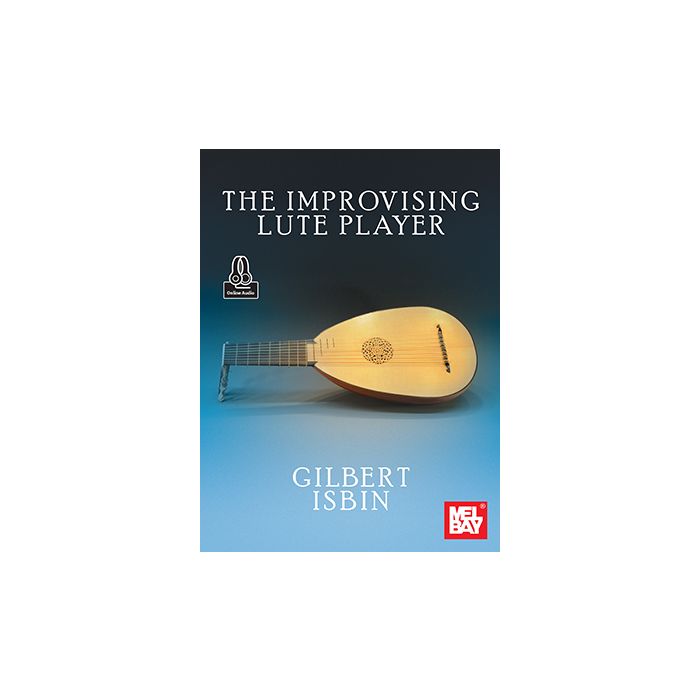
Beginning with the key of C and using scales, intervals, modes, grounds, and chord progressions, The Improvising Lute Player is the first book ever to help you learn to improvise on the lute. The book provides all the necessary tools and advice to get you started. With numerous examples, every chapter contains a “Your Turn” section giving you the opportunity to create your own improvisations. The book is written for the 6-course Renaissance lute, entirely in French tablature with letters representing frets. Ultimately, if you stay the course with this book, you’ll be able to improvise with modern jazz chords on the Renaissance lute, all by reading tablature.
Includes access to online recordings of the author performing each example.
Breaking Down the C Major Scale
Single Note Lines Preceded by a Bass Note
Dyads and Melodic Invention
Two Dyads per Bar
Adding a Middle Voice
Chord Progressions
Root-Third in the Bottom Voice
All Approaches Thus Far
The C Dorian Mode
Embellishing the Bass Line (1), Combination Note on Beat 4
Embellishing the Bass Line (2), Combination Note on Beat 2
Embellishing the Bass Line (3), Combination Notes on Beats 2 and 4
Root-Fifth
A Freer Bass Line Approach
Chord Shapes: Arpeggiation
More on Dyads (Part 1), Dyads are Chord Notes Only
More on Dyads (Part 2), Dyads are Chord Notes and Other Scalar Material
Syncopation
Adding Chromatic Tones in the Melody
Modern Sounds (Part 1): f5 and s5 in the Middle Voice
Modern Sounds (Part 2): Adding Maj7 to Minor Chords in the Middle Voice
Modern Sounds (Part 3): f9 and s9 in the Middle Voice
Modern Sounds (Part 4): sus4 Chords
Combining Notes in a Higher Register With Open Strings
The Key of G Major
The Key of G Minor
The Key of D Minor
Summary
| Featured Product | Yes |
|---|---|
| Composer | ISBIN, GILBERT |
| Availability | Available |
| TAB/Notation | TAB Only |
| Description | Beginning with the key of C and using scales, intervals, modes, grounds, and chord progressions, The Improvising Lute Player is the first book ever to help you learn to improvise on the lute. The book provides all the necessary tools and advice to get you started. With numerous examples, every chapter contains a “Your Turn” section giving you the opportunity to create your own improvisations. The book is written for the 6-course Renaissance lute, entirely in French tablature with letters representing frets. Ultimately, if you stay the course with this book, you’ll be able to improvise with modern jazz chords on the Renaissance lute, all by reading tablature. Breaking Down the C Major Scale Single Note Lines Preceded by a Bass Note Dyads and Melodic Invention Two Dyads per Bar Adding a Middle Voice Chord Progressions Root-Third in the Bottom Voice All Approaches Thus Far The C Dorian Mode Embellishing the Bass Line (1), Combination Note on Beat 4 Embellishing the Bass Line (2), Combination Note on Beat 2 Embellishing the Bass Line (3), Combination Notes on Beats 2 and 4 Root-Fifth A Freer Bass Line Approach Chord Shapes: Arpeggiation More on Dyads (Part 1), Dyads are Chord Notes Only More on Dyads (Part 2), Dyads are Chord Notes and Other Scalar Material Syncopation Adding Chromatic Tones in the Melody Modern Sounds (Part 1): f5 and s5 in the Middle Voice Modern Sounds (Part 2): Adding Maj7 to Minor Chords in the Middle Voice Modern Sounds (Part 3): f9 and s9 in the Middle Voice Modern Sounds (Part 4): sus4 Chords Combining Notes in a Higher Register With Open Strings The Key of G Major The Key of G Minor The Key of D Minor Summary |